Category Archives: notMYwords

Transcript for Connecticut Shooting: Motivations Behind Mass Shootings

download (7)

“Today’s tragedy comes on the heels of that other mass shooting 72 hours ago in the mall filled with holiday shoppers outside portland. This singular tragedy in newtown, joining the ranks of the other dark days, coe, tus an, aurora. Pierre thomas now tells us what the experts say they see when they look at the men behind these massacres.

Reporter: The virginia tech A shooting spree in tucson, arizona –six dead. 12 killed at a colorado movie theater. Mass murder conducted by a lone gunmen.

download (5)download (6)

Continue reading Transcript for Connecticut Shooting: Motivations Behind Mass Shootings

Ijebu people, stinginess and Juju: The Alare apology

images (3)

It has been many thousands of years since the establishment of the city of Ijebu somewhere in-between the city of Lagos and the old Oyo Empire within present-day Nigeria. Interestingly, whether one can say the city was established at all or that it has always existed with the advent of the Universe (just like any other city for that matter) should ordinarily constitute a complexity.


downloadimages (1)

There are a number of things that are unique about Ijebu and the Ijebu people; talk about an Ijebu participation in the war against colonialism, the Yemoja war (the war was christened Yemoja because this was where the war was hottest between the Ijebus and the British. There is a Yemoja natural swimming pool, where the British used to relax during war-breaks located in the Ijebu town, Yemoja till tomorrow).


‘Segun Osoba, a renowned Professor of History, once ended a narrative on a similar subject with a funny anecdote about one of the few Ijebu converts to Christianity. This particular man became a ‘Pastor’ as is commonplace today; once, a member of his congregation vexed him (names and details withheld) to a degree that he had to take off his pastoral regalia (not sure what they used to call that), thus revealing the hitherto concealed attire of a Juju Priest.


That anecdote represented the suspicion with which the Ijebus held Christianity while yet practicing it. Insufficient to confirm though, but this suspicion is quite ubiquitous today that even the Europeans themselves have come to establish same with their attitude of faith-needlessness. One of the reasons why the current Pope has chosen to launch his twitter account @Pontifex ‘to reclaim lost sheep’. However, this is far from being the subject of discourse here.


What the interest is herein is the attitude of the world to the Ijebu race. I refer to the world because everything you hear about the Ijebu people and spoken by ‘just’ anybody around the world is almost bound to be derogatory. This has gotten so endemic (you can say pandemic, if you want) especially in contemporary times that everyone seems to want to distant itself from an Ijebu ‘CityMan’; last time I even noticed a baby suspiciously eyeing an Ijebu man. I no know wetin the guy do the pikin o!


WETIN IJEBU PEOPLE DO THE WORLD SEF?


Ijebu people are stingy. Ijebu people are Juju-rich. Ijebu people are wicked. Whatever bad, wicked, wrong, unwholesome you can think of or need a definition for, just think about any Ijebu person you know and you have your definition. That’s how the world thinks. The bandwagon effect!


There is a general belief in the world today and that is, if a man has three children for instance and one of them marries an Ijebu person; that child is counted lost. So, the man is deemed to have only two children. It is said that a man or woman completely forgets its home as soon as it marries an Ijebu spouse. It’s worse than you may think if you have never heard these lines before.


One piece of advice parents passionately give their children or guardians, their wards, over and above any other, is never to marry an Ijebu, never even date such. In fact, the thought that friendship sometimes leads to intimacy and then to dating and then marriage makes parents advise their children against friendship with any Ijebu personality. I would wonder, is this not a calculated crime against the humanity of Ijebu to keep them perpetually isolated? Well, who cares?


The case against the Ijebus is premised on the presumption  that they are extremely fetish. Unfortunately, this writer is unaware of an adequate word to describe the extent to which people passionately describe how fetish the Ijebus are. So, we’ll content ourselves with fetish…just fetish!


This is what gives birth to the fetish enslavement (nay, brainwashing) of spouses by their Ijebu partners to the point where the latter forget their families. A necessary extension from this is spouse-ritual, especially money-rituals or the like.


Another, most-unfortunate, personality trait ascribed to the Ijebus by the world is stinginess. The Ijebus are said to be a stingy tribe of people. They will rather die of hunger (no other tribe in the world dies of hunger but malnourishment except the Ijebus) than spend their ‘hard-earned’ money on themselves; talk nothing about giving people anything.


The world (by this, I mean children of the children of the children of the great great super great grand children of certain people in an almost forgotten past, who have had varying degrees of experience – mostly unwholesome – with Ijebus) has come to tag Ijebus as stingy, fetish and all that doomed adjectives. But that’s not to say, in contemporary times, there are no such Ijebus known to be stingy and fetish.  Of course, they abound!


In fact, this writer has met more ‘stingy-er’ and ‘fetish-er’ Ijebus, probably much more than anyone else. Maybe! He has, as a matter of chance, also met generous Ijebus; pious Christians and Muslims, even to a fault. If anyone hasn’t, it will do everyone a lot of good if such provides that information.


Hence, this Ijebu representation of all that is good and bad can, of human nature, not be peculiar to the Ijebu peoples of the world but an essential part of human need for self-preservation and existence (as selfish as that may be).


To resolve this stalemate, this writer went out to interview a number of people and what kept coming up, outrightly absent on Internet pages, is Alare! Alare! Who or what is Alare?


It was gathered that Alare was (is, pardon me) a god of the entire Ijebu people. As a god of the Ijebus, Alare demanded and secured absolute allegiance from his subjects. This allegiance embodies the entire ownership of all Ijebus as entities and in extension all properties belonging to the Ijebus. Follows the old saying, “Eni tó l’erú ló l’erù” – that is, he who owns the slave owns his properties.


It was therefore generally believed that all Ijebus were properties of Alare and as such all properties belonging to an Ijebu were in extension properties of Alare. No Ijebu person was allowed to make use of his own property without the permission of Alare. How much more, if he needed to give out same to someone else. Usually, Alare would not permit that.


So, it was that Ijebus were thrifty with the use of their properties for selves. That probably was where the idea of stinginess came about. I doubt if that really still happens today.


However, the possession and use of juju coupled with spouse-murder allegations against the Ijebus may not be in anyway linked with Alare. As a matter of fact, there probably could be no explanation for this especially if the concerned persons are not ready to see reasons and the fact that this too isn’t peculiar to the Ijebus, if at all it happens.

This will constitute a good discourse if there are contributions from all concerned or affected; after which there will be sequels to detail personal experiences and possible way-out.


In conclusion, the city of Ijebu exists till today with a paramount ruler, a system of governance, monarchical and democratic. There are successful marriages as much as there are failed ones, just like it happens everywhere else. Today, there are non-Ijebus married to Ijebus and who have lived to ‘ripe’ old age (if there’s anything like that) before dying naturally or still living. And their children (part-Ijebu, part-non-Ijebu) are living, growing and succeeding.


Just a few popular mentions:


– Uncle Tai Solarin was Ijebu, yet he gave his life – not just his money – for the advancement of the course of humanity. He never killed his wife; she only just died recently, many years after Uncle Tai has gone.

– Chief Obafemi Awolowo needs no mention regarding what he also did for humanity. Obafemi Awolowo University, Cocoa House and Free Education (not only for his children but for children of the country). What better way to be generous? And his wife? Anyone can still pay her a visit at her home in Ikenne , kicking, after 25 years of Pa Awo’s exit.

–  Prof. Wole Soyinka…what can (or can’t?) you say about this iconoclast?

–  Mike Adenuga, M.D. Globacom nko?

download (1)


We therefore close the curtain on the scene that, as an enlightened generation, we have responsibility to ourselves and to the unborn generations; to make history and the future a palatable drama of life.


I am Ijebu and I see all allegations against the Ijebu  as diversionary to say the least.
images

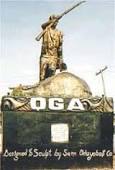
“Doctors, major problem in health care” – Oga of Pharmacists • “You’re insincere” – Oga of Doctors

These-Are-notMYwords, they are Punch’s Leke Baiyewu’s.

“Pharmacists have accused medical doctors of posing threats to the lives of Nigerians through unethical practices. They challenged them to an open debate over their activities in the health sector.

The President, Pharmaceutical Society of Nigeria, Mr. Olumide Akintayo, who spoke to our correspondent on the telephone on Friday, accused doctors of breeding quacks through the training of auxiliary nurses and health attendants in private health institutions.

He said, “Medical doctors are about the biggest problem in health care. In Nigeria today, 99 per cent of them stock drugs in their private health facilities for prescription to patients. This is wrong; it is illegal. They constitute the biggest threat to lives in the health sector.

“Find out who trains auxiliary nurses and health attendants. When the trainees leave the setting, they spread to the communities to perpetrate illegalities.”

The PSN boss argued that pharmacists could not be held responsible for the purpose for which a drug is bought.

He blamed the unrestricted over-the-counter sale of prescription drugs on regulatory agencies. He called for the empowering of the Pharmacists Council of Nigeria to enforce and prosecute. He also urged the government to budget more funds for the sector.

Akintayo said, “As for drugs, the problem in Nigeria is that there is unhindered access to all categories of drugs. The regulatory agencies are not empowered financially too. Government earmarks about five per cent of its budget for health care, compared to 13 per cent of the minimum required.”

The Chairman, Nigeria Medical Association, Dr. Francis Faduyile, however, said pharmacists were insincere with their allegations.

According to him, training of nurses and health workers in private hospitals had been banned in Lagos State.

“Pharmacists consult within their shops and this is beyond their work. It is part of the rights of a doctor to prescribe and to leverage on a number of drugs. The major question is, ‘Are pharmacists ready to stop consulting in their shops?’

“If you go to any pharmacy to complain of headache or fever, drugs will be prescribed for you. Go there with the result of a blood test; you will see them giving you drugs. It is not about professional fight; let us do the right thing.”

A Reblog: Pharmacists, doctors trade blameS over rising drug abuse deaths by Chukwuma Muanya

“PHARMACISTS, under the aegis of the Pharmaceutical Society of Nigeria (PSN) and medical doctors belonging to the Nigerian Medical Association (NMA), are trading blames over who is culpable for rising cases of drug abuse related deaths.

A Nigerian Newspaper, not The Guardian had on Sunday reported the Chairman of NMA Lagos Branch, Dr. Francis Faduyile, to have blamed deaths traceable to drug abuse on the failure of pharmacists to disallow the sale of drugs over the counter.      Faduyile also said that Nigerians prefer to visit pharmacies and pharmacists, for their health needs.

Faduyile said: “Many lives were lost to wrong diagnosis and prescription. The major challenge is the people; they are the ones creating the problems. They walk into any laboratory for tests and instead of consulting with a pathologist, they directly visit pharmacists who prescribe and administer drugs on them.

“In Nigeria, people prefer the drug shops.”

But the PSN, Lagos Branch, in a statement signed by the Chairman,  Akintunde Obembe, blamed doctors for the situation. The PSN said Nigerian doctors were particularly guilty of the phenomenon styled, dispensing doctors in both the public and private sectors.

Obembe said doctors are not trained to dispense drugs and therefore they are part of problems of drug abuse and misuse as well as the inherent complications of this unwholesome development. “The other dimension is that doctors through their hospital facilities purchase the drugs they use in practice in open markets and the scores of unregistered wholesalers presumably because the drugs are cheaper. In this way they sustain the illegality they are now complaining of,” he added.

The pharmacist said it is also very fundamental to indicate that private doctors in furtherance with their agenda to boost quackery stock and dispense drugs in unlawful facilities contrary to the provisions of Cap 535 LFN 1990 and the Fake Drug Act which prohibits the sales and dispensing of drugs in unregistered pharmacy facilities.

The statement reads: “The sale of drugs in Nigeria is ravaged by a departure from the global norm in many respects. In Nigeria today there are only about 3,000 registered pharmacy facilities in the various cadres of practice including retailers, wholesalers, importers and manufacturers. Of this number less than 2,000 are retailers who provide services directly to the consuming public.

It is a statement of fact that while there are less than 2,000 registered retail pharmacies and 10,000 patent medicine vendors, there exist over a million different drug sellers who are unregistered.”

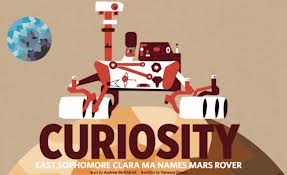
Robot on Planet Mars: the 11 year old Clara, who named him (or her?) speaks (or spark?)

Curiosity and Clara, shot 2009

“On Aug. 5 at 10:31 p.m. PST, a rover named Curiosity touched down safely on the surface of Mars, and I was lucky enough to have a front-row seat.

My name is Clara, and when I was in 6th grade, I won the essay contest NASA held to name its next Mars rover. The essay I wrote was not even 250 words long, but somehow it was enough to change my life.

Clara/Curiosity Rover

I still remember that chilly December day, sitting in science class. I’d finished a worksheet early and decided to get a TIME for Kids magazine off of Mrs. Estevez’s bookshelf. It was the 2008 Invention Issue, but that wasn’t the only thing that caught my eye. In the magazine, there was an article about a girl who named the Mars Exploration Rovers, Spirit and Opportunity.

The article also talked about the essay contest NASA was holding to name its next Mars rover. Before I even knew anything else about it, a single word flooded my 11-year-old mind: Curiosity.

“Before I even knew anything else about it, a single word flooded my 11-year-old mind: Curiosity.”

I couldn’t wait for the bell to ring so I could get started on my essay. That afternoon, I raced home from the bus stop, sat down at the computer, and typed until my fingers ached. It turns out I was just in time. A few days later, and the contest would have closed.

Five months later, shortly after I had turned 12, I was watching a National Geographic special on mammoths when the phone rang. My mom answered, and immediately, a wide smile spread across her face.

That second that Curiosity touch Mars from space after almost a year in transit

When she told me that I had won, I was happier than I could ever remember being. I screamed and ran up and down the stairs and all around the house. I completely forgot about the mammoths and did not even remember to turn off the TV until it was really late.

Curiosity is such an important  part of who I am.

 

While in Space

I have always been fascinated by the stars, the planets, the sky and the universe. I remember as a little girl, my grandmother and I would sit together in the backyard for hours. She’d tell me stories and point out constellations.

Here in the heart of the country, my grandmother would say, there were no bright city lights to compete with the brilliance of the stars. There was just the chirping of the cicadas and the soft summer breeze.

Settling in

My grandmother lived in China, thousands of miles away from my home in Kansas. I loved the stars because they kept us together even when we were apart. They were always there, yet there was so much I didn’t know about them. That’s what I love so much about space. No matter how much we learn, it will always possess a certain degree of mystery.

In the past, space exploration may have been a competition to see who got somewhere first or the fastest. But now, it is one of the few things that bring people together. Science is a language that needs no translation. It doesn’t matter where you’re from or what you look like — you just have to have a thirst for knowledge and a passion for learning in order to succeed.

People often ask me why we go to faraway places like Mars. Why do we explore? My answer to that is simple: because we can. Because we’re curious. Because we as human beings do not just stay holed up in one place. We are constantly wondering and trying to find out what’s over the hill and beyond the horizon.

The Curiosity rover is more than just a robot. It is more than just a titanium body and aluminum wheels. Curiosity represents the hard work, passion, love and commitment of thousands of people from all over the world who were brought together by science.

Science is so awesome. It is breathtaking and mind-blowing, intertwining and unifying; and sometimes, it’s just a little bit crazy. The discoveries we make about our world are incredibly humbling. They move us forward and have the potential to benefit all of mankind.

This December it will be four years of my life that have been tied to Curiosity in some way. I’ve met so many amazing people through this experience, from scientists to engineers to administrators to volunteers. Their dedication and fervor inspire me immensely. My journey with Curiosity and the MSL mission team has shaped the person that I am today, as well as the person I would one day like to become.

I am deeply grateful to everyone who made it possible for me to have this amazing adventure.

And to you, I hope your curiosity takes you far.”

NIGERIA: Mark of the Bills

It’s been 98 solid years since Nigeria, as we know it today, embarked on a 100-year marathon to…one wonders, NOwhere while never preparing for the NOWhere.


Could the British be described as being wise, even wiser than themselves, for merging ‘a’ south and ‘a’ north into a matrimony that was

almost too certain not to work and for perfectly riveting that thinking into the heads of the ancient Nigerian oligarchy (some of whom were self-serving to say the least) to a present situation where the latter would assume ownership of the creation of a state called Nigeria; albeit ignorantly.


That this amalgamation is a 100-year experiment, which can thereafter be done away with, if the regions are convinced the union is not working is an open secret. Of what significance was that secret caveat if not a loophole? Or could it have been penned for really considerate reasons; should in case these ‘niggers’ finally wake up to the incongruity of a deliberately mismatched arrangement?


Questions are very important. Why? Because they make us see the dirty, sometimes ugly but essential roots beneath the elaborate chunk that is Tree. In 1914, the world birthed Nigeria – a name suggested in the 1890s by British journalist, Flora Shaw. Nigeria has since then sailed through murky waters, through thick-and-thin traversed deserts. She has seen rough tough times and of course, good smooth times.


It must be noted that in all generations of this new country (new in relation to pre-Christian era, specifically 5th century BC, civilization of constituent regions of what would much later become one nation), there have been similar questions posed. Though slightly modified now and then, they all demanded similar responses. The one question a handful of parties in this generation is asking, irrespective of whatever questions previous generations have asked, is “How are we doing NOWhere?”


This is a unique question posed and yet answered in practical terms by the questioner.

“How are we doing NOWhere?”

“Not good!”

That response, mind you, wasn’t uttered in words but symbolised by the crackles of the guns of dissident (some, well-meaning) well-organised fundamentalist groups. They must have taken cue from the past, especially with respect to events that had the tags of Ifeajuna, Boro, Wiwa, Sergeant Rogers and others who might have been fighting for different causes.


“How are we doing NOWhere?”

We should be able to look around and give informed responses about how well we are doing as a country of less than a hundred years or more than 50 depending on what perspective you need to weigh the question. This is essential because it had been planned at the birth of Nigeria that about this time in the humanistic history of the country, the people must ask questions pertaining to the unity of the country; that is, if we really want to continue to live together or choose, out of discontent, to go our separate ways come 2014 when the country’s experimental timeline expires.


As a country, we have survived many tough times. Times we condescended to making a foreign tongue our lingua franca (I wonder why on earth it should be called that. Microsoft Encarta has the following to say:


lingua franca
lin·gua fran·ca [lìng gwə frángkə]

(plural lin·gua fran·cas or lin·guae fran·cae [lìng gwee frángkee])

noun

1. language used for convenience: a language or mixture of languages used for communication by people who speak different first languages
2. traders’ language in Mediterranean: the mixed language used chiefly by merchants throughout Mediterranean ports until the 18th century, consisting mainly of Italian with features of French, Spanish, Greek, Arabic, and Turkish

[Late 17th century. < Italian, “Frankish tongue”]Microsoft® Encarta® 2009. © 1993-2008 Microsoft Corporation. All rights reserved.


Was it intended that any colonised nation must on acquiring independence retain French (Language of French…lingua franca) or any other foreign language for that matter as her official national language? How about if my country uses her mother tongue as the national language, will that still be called lingua franca?


We condescended to adopting a foreign tongue as lingua franca because our diversities, strong as they were, would not permit us to agree on either one or a mixture of our many languages. That could have been a modest opportunity to prove how well we are meant to be together.


Through the years, it has been suspicions of one and the other, acts of diplomatic aggression occasioned by the suspicions, outright offensive against the innocent public by the few Geladas who are always bent on squaring with themselves and a return to suspicions. The circle keeps getting rounder.


With the President’s comments on the country’s centennial celebrations come 2014, Nigerians have been reacting in diverse but unique ways.

Some wonder how the celebration of old age (or young age?) would improve accident-prone roads, power supply, potable water supply, good healthcare delivery, affordable education, affordability of food to the teeming poor?


Former Governor of Osun State and the National Chairman of Action Congress of Nigeria, Chief Bisi Akande recently called the citizenry’s attention to the prevalence of crime, violence and insecurity in the land. “What is there to celebrate about the country’s amalgamation when everything is upside down?” he remarked.


Some leaders feel that though the unity of the nation remains nonnegotiable as she marks 100 years of her amalgamation, some groups have so far not been fairly treated within the confines of the amalgamation. And these groups NOWhere emphasize their legal rights to choose to stay or leave, come 2014.


Further questions NOWhere  can only be voiced representations of the acts of violence already perpetrated by the dissident ‘faceless?’ groups , as some would posit probably to make a statement of intolerance. That is, intolerant of other nationalists humping together, saying “We are one Nigeria”. These nationalists would imagine a country of over 160 million heads and more than 250 tongues can and must only be ruled by them, their children or their protégé. “It’s either me or nothing!” While one party is fighting against western education, another is pursuing it with all her might and yet another prefers a separate path – the path of trade.


Somewhere significant down south, there are rearing heads ready to challenge the status quo and walk away with whatever it is they call ‘their own’. Parties are mooting the idea of secession. As ridiculous as that sounds, tossing the idea a few times until it becomes a question should not be a bad idea. How does secession square with our fair expectations and standard quality of life if you know what I mean?


The issue being raised and the public outcry is not actually about the validity of secession of federating units but a return to the status quo, where homogeneity of culture and practices were never put to question. Who doesn’t know that harmony is essential to the survival of any state in the world? And without it, a lot is bound to go wrong.


With what injuries (offences) and scars (memories) shall we celebrate the centennial of Nigeria?


Celebrating this is a statement to the effect that Nigerians are happy, content and ready, in spite of the regional, almost geographical, differences, to go on with the ‘experiment’ of an ad-hoc union of regions while de facto lives are being lost, properties destroyed, tears shed, memories mangled and destinies go up in flames; all feeding the bulging bellies of big sharks.